By the RK Trends Team | Last reviewed: September 2026
Air purifiers are a common answer to dust, allergens and cooking or smoke odours indoors, but the technology and the marketing claims around it vary a lot between listings. This guide explains what the different filter types actually do, what to check before buying, and lists a few options on Amazon India by room coverage.
We chose these by comparing listing details, customer ratings and reviews, and brand track record, as explained in our product selection process. We haven’t tested these units ourselves, so treat this as a starting point and read the current listing and recent reviews before you buy.
How Air Purifiers Work
Most air purifiers pull room air through one or more filters and release the filtered air back out. A HEPA filter is the core of most units and is rated to capture at least 99.97% of particles down to 0.3 microns, such as dust, pollen and pet dander. Many purifiers pair this with an activated carbon filter, which adsorbs odours, smoke and some volatile organic compounds (VOCs) rather than trapping solid particles.
Some purifiers add UV-C light or an ionizer. UV-C can inactivate some airborne bacteria and viruses that pass close enough to the light source, but it doesn’t clean the whole room instantly, and its effectiveness depends on exposure time and the specific design. Ionizers work by charging particles so they clump and settle out of the air; a few models also generate ozone as a side effect, which health agencies advise against breathing in any significant amount, so it’s worth checking a purifier’s specs for its ozone output before buying one for a bedroom or a room used often.
What an Air Purifier Can and Can’t Do
A well-matched purifier can reduce airborne dust, pollen, pet dander and some odours in the room it’s placed in. That’s genuinely useful if you have allergies or live somewhere with high outdoor pollution. It’s not a substitute for medical treatment for asthma or allergies, and it won’t do much for a room it’s too small for, or for pollutants that settle on surfaces rather than staying airborne. If you or a family member has ongoing respiratory symptoms, that’s worth discussing with a doctor rather than relying on a purifier alone.
What to Check Before You Buy
- Room coverage. Check the manufacturer’s stated coverage area (often in sq ft) against the room you’ll actually use it in. A purifier rated for a small bedroom won’t do much in a large living room.
- CADR (Clean Air Delivery Rate). Where it’s listed, this indicates how quickly the unit filters air, not just whether it has a HEPA filter.
- Filter type and replacement cost. True HEPA (H13 or higher) filters typically need replacing every 6–12 months depending on use; check the listed filter life and what replacements cost before you buy.
- Noise level. Listed in decibels where available. Worth checking if the purifier will run overnight in a bedroom.
- Ozone output. If a listing mentions ionization, check whether the unit is certified ozone-free, since ozone can irritate the lungs.
A few options on Amazon India, by coverage:

- 【Air Purifier Quiet & Earned the Certified】:The noise level of the hepa filter air purifiers is as low as 23 dB, is as s…

- TOP-RATED AIR PURIFIER BRAND: LEVOIT is the #1 selling air purifier brand in the United States, recognized globally for …
- WORRY-FREE AIR QUALITY: Effectively addresses common air quality issues like pollen, dust, smoke smells, and pet dander,…
- UNIQUE AROMATHERAPY FEATURE: Enhances your space by allowing you to add essential oils to the aroma pad, providing a ref…
- PERSONAL HEPA AIR PURIFIER: Utilizes 360° VortexAir 3.0 technology and a 3-stage filtration system, capable of purifying…
- EASY TO USE: Features a simple control system with only two buttons to cycle through three fan speeds and check the rese…
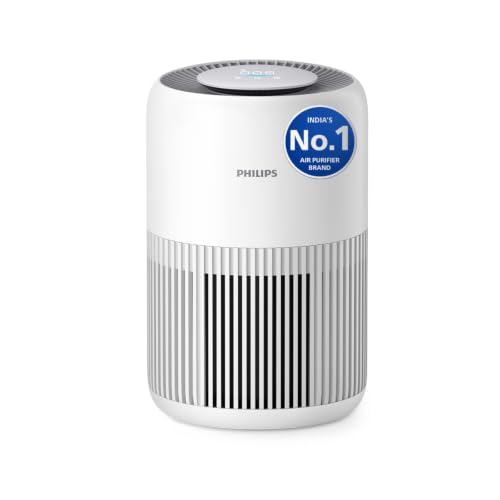
- Purifies Small Rooms Fast – With 250 m3/h CADR, the AC0920 covers rooms up to 700 sqft (65 m2 NRCC) or 320 sqft (30 m2 G…
- 2-Layer HEPA NanoProtect Filtration – Captures 99.97% of particles as small as 0.003 microns, 100x smaller than standard…
- Quiet Sleep Mode – Runs as low as 20.5 dB on its lowest setting, quiet enough for a bedroom or study without disrupting …
- AeraSense Smart Sensing – Our professional-grade sensor scans the air 1,000 times a second to detect pollutants, reporti…
- Simple, Intuitive Controls – Adjust fan speed and switch modes directly on the device, no app required.
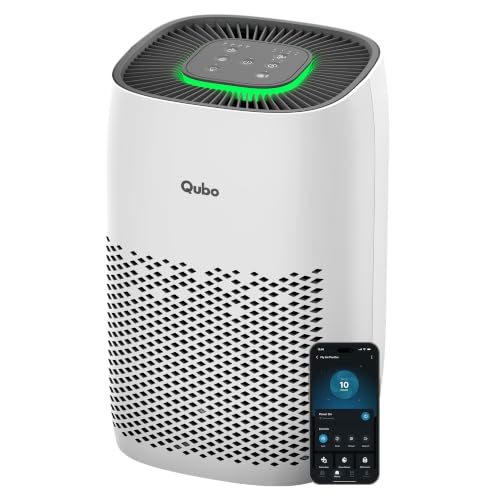
- 【Removes Up To 99.99% Of Pollutants】Equipped with a true 5-layer filtration system, the Qubo Smart Air Purifier Q200 tra…
- 【True 5-Layer Filtration】Built with 5 dedicated stages — two Pre-Filters, a Nano-Silver Antibacterial Coating, Activated…
- 【High CADR Performance】With a Clean Air Delivery Rate of 150 m³/h, the Qubo Q200 delivers fast, thorough purification fo…
- 【4 Modes Of Purification】Choose from Auto, Manual, Sleep and AI Mode based on the air quality. Auto adjusts fan speed in…
- 【App-Controlled With Smart Scheduling】Control your purifier from anywhere via the Qubo app — switch modes, check real-ti…
Coverage figures, filter life and prices come from the Amazon listings and may change, so check the current details before you buy.
Keeping It Running Well
- Placement: an open area away from walls and furniture lets air circulate through the unit properly.
- Filter changes: follow the manufacturer’s replacement schedule, typically every 6–12 months for the HEPA filter depending on use and air quality.
- Right-size it: match the coverage rating to your room. Undersized units run constantly without keeping up; oversized units waste energy.
- Run it consistently rather than only switching it on occasionally, particularly in rooms you spend the most time in.
Frequently Asked Questions
Do air purifiers help with allergies?
A HEPA purifier can reduce airborne allergens like dust and pollen in the room it’s placed in, which some people find helps their symptoms. It isn’t a medical treatment, and persistent allergy or asthma symptoms are worth discussing with a doctor.
Is ionizing technology safe?
Some ionizing purifiers produce ozone as a byproduct, which can irritate the lungs at higher concentrations. If a listing mentions ionization, check whether the unit is certified ozone-free before buying it for a room you spend a lot of time in.
Have you tested these purifiers?
No. Our picks are based on research: listing details, customer ratings and reviews, and brand track record. Coverage, filter life and prices change, so confirm the details on Amazon before you buy.
More from Home & Kitchen: Best Blenders and Grinders | Amazon Kitchen Gadgets